Staff Highlight: Diane Roy
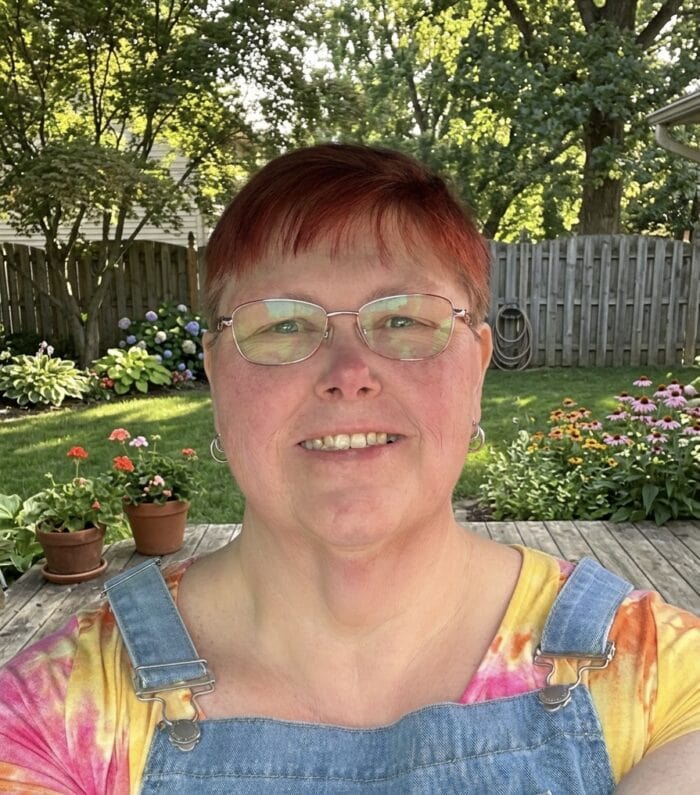
Diane Roy has been a Regional Long-Term Care Ombudsman serving the Northern Panhandle for over two years.
It is a long title that may be confusing for some. What exactly does a non-attorney Long-Term Care Ombudsman do at a law firm?
Legal Aid of WV (LAWV) has a contract with the state to provide Ombudsmen to West Virginia’s long-term care facilities, like nursing homes.
Diane sums up her role like this:
“The Ombudsman Program at LAWV is an advocacy service for people living in long‑term care facilities. Its role is to make sure residents are treated with respect, their rights are protected, and their voices are heard. Ombudsmen visit nursing homes and assisted living communities, listen to residents’ concerns, and help resolve problems related to care, quality of life, or rights. This can include issues like unmet needs, communication problems, or feeling unsafe or unheard.”
With her past experience as a bereavement coordinator for hospice, Diane felt strongly working with long-term care residents was a good fit for her, as it requires thoughtful patience and compassion.
She joins a team of eight total Ombudsman staff working throughout West Virginia.
“Our team works closely together,” Diane says. “We consistently support each other by sharing observations, collectively solve problems, and step in when a colleague needs assistance. There is a genuine culture of respect and trust within our unit that strengthens our advocacy for residents.”
Ombudsmen like Diane travel across their region of the state, visiting facilities where they observe and speak with residents; they then work to resolve issues identified by residents, their families, and staff.
“Historically, this role was seen as ‘fixing’ problems in the facilities. Today, we focus more on giving the resident the tools to voice their own needs,” Diane explains. “We deal with highly complex abuse cases (physical, non-physical, and financial), alongside traditional health and care complaints.”
Ultimately, Diane says the crucial piece of Ombudsman advocacy is the understanding that she is the eyes, ears, and voice of residents who cannot speak up for themselves.
“Many residents in long-term care face physical, cognitive, or emotional challenges that make it difficult—or even impossible—for them to advocate for themselves. Some hesitate to speak up out of fear of retaliation or being labeled ‘difficult.’ As an Ombudsman, I am a neutral advocate ensuring residents know their rights and feel supported in exercising them.
“Even well-run facilities can prioritize efficiency over choice, and I’ve seen how small decisions such as meal times, daily schedules, or room privacy can deeply affect a resident’s sense of control. I believe long-term care should be built around the person, not the system.”
Outside of her work as an Ombudsman, Diane likes to craft, write short stories, and spend time in West Virginia’s beautiful nature. She also gets involved by volunteering with her church in programs that support community members in need—she says it sharpens her relationship-building skills as well.
“At the end of the day, my work is incredibly rewarding,” Diane says. “For the first time in my life, I don’t go to work with a sense of dread but instead, I genuinely want to be there. I know what I do makes a real difference in people’s lives, and my co-workers in the Wheeling office and Ombudsman team are truly a joy to work with.”
Diane’s Resident Stories – Examples of Long-Term Care Ombudsman Advocacy
Henry:
At a nursing home recently, “Henry” was sitting in his normal spot in the lobby when I walked in.
When he saw me, he yelled “HEY!”
I said hello and asked him how he was doing. Henry has dementia and doesn’t communicate fully. He responded, “Hey, you complain?”
I said, “No I am not complaining. Do you have a complaint?”
He replied, “Hey! I don’t have an egg!”
I really wasn’t sure what he was trying to tell me. He just kept saying loudly that he didn’t have his egg. I asked him a few questions trying to figure out what egg he was referencing and where it might be. A nurse came over to take him to his room, and I even asked her about his meals, thinking his egg could have been something missing from his breakfast.
Finally, I told him, “I’ll see what I can do about that.”
He agreed, and I wasn’t sure what I was going to do to help him but was glad that calmed him momentarily.
I started monitoring the facility. As I was finishing up my visit, it dawned on me. My last visit was close to Easter, and I had watched the residents decorate eggs in the activity room.
I decided to take a shot in the dark and asked the activity director if Henry had decorated an egg. She said he didn’t because he was sick at the time. I asked if she had any plastic eggs left, and she said yes and gave me one.
I took the egg to Henry’s room and before I could say anything, he exclaimed, “MY EGG!” and took it out of my hands.
I confirmed with him, “Is this the egg you were wanting?”
He repeated, “Yes, my egg!” and gave me a thumbs up.
It was a happy victory because 1) he knew I was the person who handled complaints and 2) I was able to figure out what he wanted and help him get it.
Barbara:
“Barbara” was a resident living with dementia in one of my facilities. From the first time I met her, she seemed to recognize something familiar in me. Perhaps I reminded her of someone she had trusted, and she became very attached to me.
Every time I visited the facility, she was overjoyed to see me and greeted me with a big smile and wave.
One visit, when I arrived, she was confused and agitated in the activity room and refused to go back to her room. Staff were trying to work with her unsuccessfully, so they asked if I would be willing to talk with her.
As soon as I entered the activity room, she smiled and waved. She told me with great concern, “They won’t let me go back to my room.”
I responded calmly, “They won’t? Well, let me see what I can do about that.”
I went to the facility administrator’s office and asked if she would come with me to ease the situation. When we went back to the activity room together, I asked Barbara to tell the administrator what was wrong.
She repeated, “They won’t let me go to my room.”
“Do you want to go to your room,” the administrator asked.
“Yes, of course I do,” Barbara said.
“Okay, let’s go,” the administrator responded. After the exchange, they calmly walked to Barbara’s room together.
I was grateful I had earned Barbara’s trust enough to help de-escalate the situation for the staff and for Barbara. The experience reinforced the importance of presence, patience, and person-centered advocacy. Simply making a resident feel heard and understood can restore calm, dignity, and comfort.