Aaron’s Story
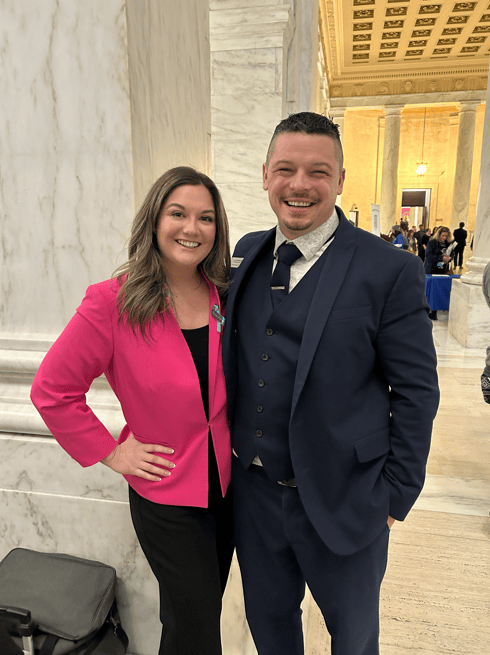
In January 2021, Aaron walked into New Beginnings Home for Men in Logan, WV. The name promised something Aaron desperately needed: a new beginning.
He had been struggling for years with substance use disorder and its consequences.
“I’ve been using drugs most of my life,” he says. “It’s caused me a lot of issues—everything from a derailment of my military career to divorce to incarceration.”
Aaron had just finished his last period in prison before New Beginnings. He spent 8 months at the recovery house in Logan, where he started building something for himself.
He got a stable job at Collegiate Recovery, where he helps others in recovery, and moved into a place of his own. In 2022, he applied for early dismissal of his parole, and it was granted.
He kept building.
One step of his recovery he hoped for was expungement, or sealing of his criminal records. For Aaron and many others, expungement creates new opportunities, but the most important part is the relief.
“I’d stolen a vehicle, and I got charged and convicted of grand larceny,” Aaron explains. “I got connected with my attorney, Kaylie, through Jobs & Hope WV. I wouldn’t have known where to start with an expungement. I’m not a dumb guy, but that would have been a really hard process to enter into without some legal counsel.
“Having an expungement for your record—well, that could mean the difference between success in the rest of your life or being stuck in the same rut for the rest of your life. That’s a big deal.”
Kaylie started working with Aaron in early 2025. Together, they started gathering examples of Aaron’s progress in recovery, which can help secure an expungement.
Aaron had been working at the same job for three years. He was able to finish his associate’s degree at Southern West Virginia Community and Technical College. He then went on to Concord University for a Regency Bachelor of Arts, with an emphasis in social work. Now, he’s working on a master’s in social work at Marshall University.
Aaron and Kaylie put together a significant packet of accomplishments, letters of recommendation, and other information about his rehabilitation and applied for expungement in January 2026.
It was granted.
“I really want people to be free—to be free of the mistakes of their past and enter an era of hope,” Aaron says. “I’ll continue to refer people to Legal Aid to get expungements.”
Aaron has translated his success into a life of sharing his blessings with others.
He met his wife, Amber, at a Celebrate Recovery Ministry, and they both work in recovery today. Amber is a Peer Reentry Program Coordinator for The REACH Initiative. She with navigators across West Virginia to help people get back into their communities after being in prison.
“We both work with nonprofits and share our stories so people can draw hope from it,” says Aaron. Both Amber and Aaron volunteer with their local recovery ministry and their church ministry. Aaron has sat on prevention boards, reentry councils, and advisory committees for local groups.
They both do whatever they can to give back and heal their communities of the pain brought on by the opioid epidemic.
Aaron is dedicated to the message that recovery is possible. Everyone deserves the chance to chase after the life they imagine.
“If we would just approach every interaction with other human beings with love and compassion and not be judgmental of what people have carried in their lives, we would begin to see the change that everyone wants so desperately in the people they love and their communities that we all live in and some serve.”
“Stigma causes so many people to not feel worthy—not worthy of living, let alone getting treatment. That hopelessness causes a deadly cycle of addiction and chaotic living. This has led to death, destruction, and despair that have been unmatched in the history of our society. However, if there is one thing I have seen that can help us break through this terrible situation, it is the power of hope.
“Hope can move that needle of life to one I think we can all be proud of, and it starts with non-judgmental approaches and real support for people who still suffer from a clinically diagnosable disease of the mind known as a substance use disorder.”